Open Instagram, TikTok, or X right now, and you will see the same image over and over again. The yellow background. The default serif font. The two bold headers.
In / Out.
The “2026 Ins & Outs” list has officially replaced the traditional New Year’s Resolution. Everyone from major streetwear brands to your quietest student is posting one.
-
In: Slow mornings, reading physical books, radical honesty.
-
Out: Doomscrolling, gatekeeping, toxic situationships.
It’s easy to dismiss this as just another performative trend—branding for the soul. But at IMPACTER, we see something else. We see a generation desperate to curate their own lives. We see students trying to articulate a moral framework in the notes app of an iPhone.
The problem? A screenshot isn’t a strategy. Writing “Boundaries” on the “In” list is easy. Having the Self-Control to enforce them is hard. And that is exactly where the measurement gap lies.
The Architecture of Intention
Why has this specific format taken over? Because it forces binary choices. It strips away the nuance and asks: What are you keeping, and what are you cutting? In our curriculum, we call this Purpose. According to our Harvard-aligned framework, Purpose is “a stable intention to accomplish something meaningful to oneself and important to the world.”
When a student posts their “Ins,” they are drafting a hypothesis of their Purpose.
-
If they list “Community care” as In, they are signaling a value.
-
If they list “Academic validation” as Out, they are signaling a shift in priorities.
Teachers often ask us how to “teach” Purpose. Right now, your students are doing it for you. They are literally publishing their values on the internet. The question is: are you engaging with that list, or just scrolling past it?
The “Out” List: A Test of Self-Control
Let’s look at the “Out” column. This is where the real data hides. Most “Out” lists are actually just wish lists for Self-Control.
-
Out: Procrastination.
-
Out: Vaping.
-
Out: Caring what people think.
These aren’t aesthetic choices; they are behavioral battles. The “Chill Guy” meme of 2025 taught students to be passive. The “Ins & Outs” list asks them to be active. But without a mechanism to track their progress, the “Out” list becomes a source of shame by February.
If you want to help a student actually keep “Doomscrolling” on the “Out” list, you can’t just like their post. You have to measure their Grit.
Turning the Screenshot into Evidence
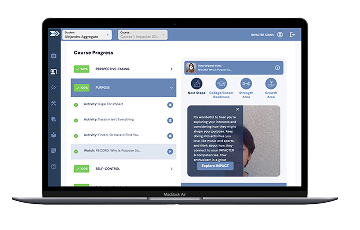
This is where Human Skills Analytics transforms a trend into a tool. At IMPACTER, we don’t want students to just make the list. We want them to narrate the struggle of keeping it.
Imagine an IMPACTER prompt that says:
“Look at your ‘Out’ list for 2026. Pick one thing you are trying to cut, and tell us about a moment this week when you almost failed, but didn’t.”
When a student speaks that answer into our platform, our Neural Assessment Engine picks up the signal:
-
Did they articulate a strategy? (Evidence of Self-Control)
-
Did they reflect on why it was hard? (Evidence of Growth Mindset)
-
Did they connect it to a larger goal? (Evidence of Purpose)
Suddenly, the viral trend isn’t just content. It’s a diagnostic. You can see which students have the executive function to execute their vision and which ones are just following the hype.
Make the “In” Count
The “Ins & Outs” trend proves that Gen Z isn’t nihilistic. They want a better life. They want “Slow mornings” and “Real connection.” They have the vision. They just need the rubric.
So, let them write the notes. Let them post the screenshots. But then, ask them the hard question: How are you measuring the gap between your list and your life?
Because at IMPACTER, we believe that if you can measure the skill, you can keep the resolution.
Explore the 8 Anchor Attributes
See how IMPACTER measures Purpose
Let’s talk. →