The box office numbers for Avatar: Fire and Ash are massive, but the TikTok metrics are telling a deeper story. While James Cameron wants us to root for the peaceful, nature-loving Na’vi, Gen Z has chosen a different champion. Scroll through your “For You” page this week, and you won’t see much blue. You’ll see ash.
You’ll see Varang, the leader of the Ash People.
Why is a “villain” defined by rage, volatility, and aggression resonating so deeply with young people right now? Because after a year of “locking in” and being the “Chill Guy,” the emotional pendulum has swung. Students are tired of performing calm. They are resonating with the fire.
In schools, our instinct is to extinguish that fire. We see anger as a behavioral defect. We see the “Ash People” in the back row as problems to be managed.
But at IMPACTER, we see them differently. We see energy. And energy—even explosive energy—is something you can measure, harness, and refine.
The “Crash Out” Generation
If 2024 was about “Quiet Quitting” and early 2025 was about the “Chill Guy,” late 2025 is the era of the “Crash Out.” Students are feeling the pressure of a hyper-competitive, AI-driven world, and they don’t always have the vocabulary to process it. So, like Varang, they let it burn.
-
They argue with teachers.
-
They post volatile takes online.
-
They disrupt the status quo.
Traditionally, schools meet this energy with suppression. We suspend the “Ash People.” We reward the “Na’vi”—the students who sit quietly, nod politely, and repress their actual feelings. But is compliance the same thing as Self-Control? Absolutely not.
Compliance vs. Control: The Data Gap
At IMPACTER, we define Self-Control not as the absence of emotion, but as “the ability to govern feelings and actions to accomplish long-term goals.” (This comes directly from our Harvard MCC-aligned framework).
A student who sits silently might not have self-control; they might just be frozen. A student who is shouting might actually be demonstrating high agency—they just lack the Perspective-Taking to deliver their message effectively.
When we banish the “rage,” we lose the data. We lose the chance to see why the fire is burning.
Don’t Put Out the Fire. Measure It.
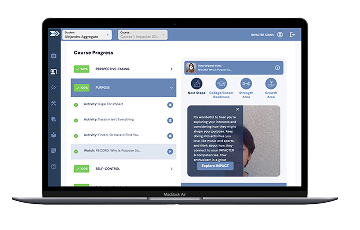
Imagine if, instead of sending a “volatile” student to the office, we gave them a microphone. This is what IMPACTER does. We encourage students to speak into the platform during moments of high emotion or reflection. We want the “Varang” energy on tape.
Why? Because our Neural Assessment Engine can find the gold in the ash. When a student rants about a perceived injustice—a grade they didn’t deserve, a coach who benched them, a peer who disrespected them—our system analyzes the structure of that sentiment.
-
Is there Grit? Are they angry because they care deeply about a goal that was blocked? That’s passion.
-
Is there Purpose? Are they fighting for a value they believe in? That’s leadership potential.
-
Where is the Perspective-Taking gap? The system identifies exactly where the student fails to see the other side, turning a “behavioral issue” into a clear learning objective.
The “Varang” Pivot
The most dangerous students in the world aren’t the ones with fire in their belly. The most dangerous students are the ones who have checked out completely. The “Ash People” in your classroom are often your future leaders. They have the drive. They have the intensity. They just need the rubric.
If we can teach them to channel that “Crash Out” energy into Responsible Decision-Making, we don’t just get better students. We get changemakers.
So, go ahead and watch the movie. But when you see Varang on screen, don’t look at her as a villain. Look at her as a student who is desperate to be heard—and imagine what she could do if her school measured her Human Skills instead of just her compliance.
Explore the 8 Anchor Attributes
How Neural Assessment Works
Let’s talk. →