California’s Commission for Behavioral Health has announced its intent to award the Santa Clara County Office of Education, in partnership with Impacter Pathway and Stanford University, to design and launch the state’s first evidence-based, validated behavioral health performance management system for TK-12 schools.
Co-created with the South County SELPA, the system will set the foundation for how schools across California measure, understand, and respond to student behavioral health — moving beyond static surveys into a continuous, language-based view of how young people are actually doing.
It will also be structured to operate within California’s Children and Youth Behavioral Health Initiative (CYBHI) fee schedule, which means districts will be able to sustain it without competing with general fund dollars. The measurement model and the financing model were designed to live together from the start.
A First-Of-Its-Kind System
This is the first state-level behavioral health performance management system in the country built around authentic student voice. The two-year engagement begins July 2026 and will pilot across at least six local educational agencies and 18 schools before scaling statewide.
The system being built rests on three core ideas California has now formally backed:
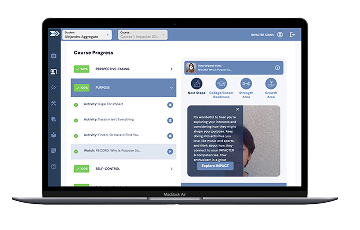
- Students speak; the system listens. Spoken and written reflections are scored against validated rubrics, producing decision-grade insights without making students fill in another bubble sheet.
- Real-time, not retrospective. Districts get a continuous read on how students are doing rather than waiting for an annual climate survey.
- Built for sustainability. CYBHI alignment means the data the state needs and the services districts can bill for are produced by the same act of listening to a student.
Authentic Voice, Not Checkboxes
For two decades, the dominant approach to behavioral health screening in schools has been the Likert-scale survey — On a scale of 1 to 5, how often do you feel… It’s fast, it’s familiar, and it’s not telling us what we need to know.
When students fill out a survey, we learn what they’re willing to admit on a form. When students speak in their own words, we learn what they’re actually carrying.
IMPACTER’s validated rubrics translate that language into ordinal scores that hold up to research scrutiny. The result is a measurement system that respects students enough to ask them what’s going on — and rigorous enough to give educators something they can act on.
That’s the architecture California has just chosen to build on.
Co-Created With The Field
This work did not start with the state contract. It started in classrooms.
Long before the Commission for Behavioral Health published its RFP, the South County SELPA had been quietly building one of the most thoughtful integrated-care models in California — and Russell Coronado and his team had been partnering with IMPACTER to ground that model in real student data. What California is now adopting at scale grew directly out of that work.
The consortium also includes a remarkable group of partners whose contributions will shape the work ahead: Deveau Burr Group, anchoring technical assistance and policy alignment; Breaking Barriers California, led by Elizabeth Estes, driving advocacy and statewide convening; and Applied Survey Research, leading evaluation and final reporting.
Stanford’s role brings an additional layer of rigor. Through the Center for Population Health Sciences, the Graduate School of Education, and the ARPA-H-funded AFC Health PRIME Registry, the Stanford team brings deep expertise in population-level health measurement and longitudinal study design. Their participation grounds the work in scientific rigor while keeping it tied to what districts actually need.
“When we measure behavioral health through students’ own words and authentic voice reflections, we honor both their humanity and the science of how young people grow. California is now leading the way.”
— Dr. Francisco Escobedo, Member, California State Board of Education
What Comes Next
Beginning July 2026, the consortium will begin co-design with participating LEAs and the Santa Clara County Office Of Education. Pilot deployment will inform the statewide rollout that follows.
For California districts already partnering with IMPACTER, this is a continuation and acceleration of work that’s been underway. For districts and partners watching from outside California, it is an early look at what becomes possible when state policy, sustainable financing, and measurement infrastructure are designed together.
We’re deeply honored to have been entrusted with this responsibility, and we look forward to building a system worthy of California’s investment in the well-being of its students.
To learn more about IMPACTER’s behavioral health screener and how it can support your district, visit impacterpathway.com or contact our team at info@impacterpathway.com.