If you’re doing what everyone else is doing, you’re already behind. In 2026, the trend cycle moves too fast to follow, and the most interesting students have figured out a secret: the algorithm is a trap.
Real status isn’t found on the “For You Page” anymore. It’s found in the hyper-niche, the obscure, and the stuff you actually have to work to find.
The Death of the Mainstream Trend
For years, the goal was to “go viral” by doing exactly what everyone else was doing. But we’ve hit a tipping point. When every trend is served to you on a silver platter by an AI, “liking” something doesn’t take any effort.
That’s why we’re seeing the rise of “Gatekeeping.” Whether it’s 19th-century Japanese joinery, deep-sea snail philately, or vintage modular synth restoration, the new flex is having a hobby so specific and so difficult to master that you couldn’t find it on a trending tab if you tried.
It’s not about being mean; it’s about Curiosity as a status symbol.
Stop Telling. Start Showing.
In education, we spend a lot of time asking students to tell us who they are.
-
“Rate your curiosity on a scale of 1–5.” * “Write an essay on why you think persistence is important.” The result? Everyone checks the “Strongly Agree” box. It’s all tell, no show. On TikTok, the “gatekeeper” doesn’t just say they like fashion; they show you a “grail” they spent three years tracking down.
That is the exact difference between a traditional survey and the IMPACTER approach:
| Feature | Traditional Surveys (“Telling”) | IMPACTER Pathway (“Showing”) |
| Primary Input | 1-5 Likert Scales / Checkboxes | Authentic Voice (Audio/Text) |
| Student Effort | Low (30 seconds to click “Agree”) | High (Deep reflection & reasoning) |
| Data Depth | Surface-level snapshots | Nuanced growth trajectories |
| Authenticity | Subjective & easily gamed | Unfakeable linguistic evidence |
| The Curiosity Signal | Checks a box: “I am curious.” | Explains the 2 AM “rabbit hole.” |
| Final Result | A static, arbitrary score | Rubric-aligned growth signals |
The 2 AM Deep Dive
At IMPACTER, we don’t look for “right” answers. We look for the “fizz”—the moment of authentic reflection that proves a student is developing the skills that actually matter.
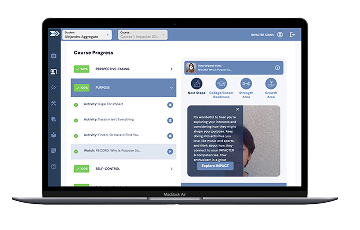
When a student uses their own voice to describe a project they’re obsessed with, they aren’t “telling” us they’re curious—they’re showing us. Our neural engine identifies the specific signals of Curiosity and Grit when a student describes why they stayed up until 2 AM fixing the wiring on a vintage typewriter.
Beyond the Algorithm
The world doesn’t need more people who are good at following trends. It needs people who are curious enough to create them.
If we want students to thrive in an AI-driven future, we have to stop measuring how well they fit into a box and start measuring how well they follow their own signal—even the parts they’re currently gatekeeping.
Ready to see what happens when student voice becomes the data?
Let’s talk. →