When Your Curiosity Score Hits Different Than Your Credit Score
On December 18th, 2024, Zendaya dropped her latest Dune: Part Two behind-the-scenes content, and within 6 hours it had 847,000 views on Instagram. But here’s the kicker — the comments weren’t just thirst traps and fire emojis. Thousands of Gen Z fans were genuinely dissecting the world-building, asking about the Fremen language, connecting Paul’s arc to real-world power dynamics. One comment thread went 40+ responses deep analyzing the ecological themes.
Meanwhile, in classrooms across America, we’re still asking students to rate their “interest in learning new things” on a 1-5 scale and calling it curiosity assessment.
The audacity.
The Culture Craves Authentic Curiosity — Education Serves Checkbox Theater
Here’s what actually happened last week in Madison’s sophomore English class:
Traditional Assessment: Madison bubbles in “4 – Agree” to “I enjoy exploring new topics” and moves on in 12 seconds.
What Madison Actually Did Tuesday Night: Spent 3 hours researching why certain slang terms explode on social media, cross-referencing linguistics papers with TikTok algorithm studies, creating a 15-slide presentation connecting AAVE evolution to platform monetization strategies, then texting her friend at 2 AM with follow-up questions about regional dialect patterns.
This is Curiosity as one of IMPACTER’s 8 Anchor Attributes — the drive to investigate, learn, and understand — operating at full capacity in the wild, invisible to traditional measurement.
The Real vs. The Fake
| Traditional “Curiosity” Assessment | IMPACTER Neural Assessment |
|---|---|
| “I enjoy learning new things” (1-5 scale) | Student records: “I couldn’t stop researching why ‘Ohio’ became the ultimate insult, which led me down this rabbit hole about regional identity and internet culture, and now I’m reading actual sociology papers about linguistic gatekeeping…” |
| Result: “Madison scored 4/5” | Analysis: Semantic complexity detected across 4 conceptual domains, 7 investigative pivots, sustained engagement over 180 minutes |
| Measures what student thinks about curiosity | Measures how student actually demonstrates curiosity patterns |
| Same rubric for all students | Hyper-localized: recognizes Madison’s cultural context while scoring universal investigative behaviors |
| Static moment in time | Curiosity competency trajectory: 456 → 523 → 567 over three assessment periods |
This table is the argument. Surveys ask students to self-report curiosity. IMPACTER analyzes actual curiosity in action.
The Neural Assessment Engine: Where Science Meets the Streets
Here’s exactly what happens when Madison responds to the microprompt “Walk me through something you recently got obsessed with investigating”:
Madison’s actual response: “So I was watching this TikTok about why nobody says ‘slay’ anymore, and I started wondering if slang has like, expiration dates? Which made me look up how words actually die, and apparently there’s this whole field called ‘lexical mortality’ which sounds metal as hell. Then I found this paper about how social media accelerates language change, and I went down this whole rabbit hole about how platforms literally shape how we talk. Like, Instagram captions trained us to write differently than Twitter threads. And now I’m wondering if AI is gonna change language even faster…”
The Neural Assessment Engine processes:
– Question generation depth: 6 investigative questions emerging organically
– Domain bridging: Linguistics → sociology → technology → cultural theory
– Conceptual sophistication: “lexical mortality” demonstrates academic vocabulary integration
– Sustained investigation markers: “rabbit hole,” “whole field,” “went down” indicate persistent exploration
– Meta-cognitive awareness: Recognizing platform-specific language patterns shows systems thinking
The score: Madison’s Curiosity competency jumps from 523 to 567, with specific growth in “Cross-Domain Investigation” and “Question Cascading” subscales.
Real Student Growth Data in Action
Here’s what Madison’s Curiosity development looked like over one semester:
September Assessment: Score 456
Response pattern: Single-layer questions, surface-level exploration, investigations end at first answer.
November Assessment: Score 523
Response pattern: Multi-step investigation, connects 2-3 domains, asks follow-up questions, shows frustration tolerance when initial searches don’t satisfy.
January Assessment: Score 567
Response pattern: Sophisticated question cascading, integrates academic sources with pop culture analysis, demonstrates meta-cognitive awareness of investigation process.
The data tells the story: Madison’s investigative capacity expanded 24% over four months through authentic reflection practice, not checkbox surveys.
The Hyper-Localization Advantage
Two students, same Curiosity competency, totally different cultural expression:
Devon (Detroit): Gets obsessed with understanding how car modifications affect resale value, researches depreciation algorithms, connects to broader economics of automotive culture.
Aisha (Portland): Deep-dives into sustainable fashion supply chains, maps fast fashion environmental impact, cross-references labor practices with brand marketing strategies.
Traditional assessment: Both would probably bubble in similar Likert scale responses.
IMPACTER’s Neural Assessment: Both receive equivalent Curiosity scores (Devon: 612, Aisha: 609) because the engine recognizes identical investigative behavior patterns — sustained inquiry, domain bridging, question generation — regardless of topic.
The AI understands that intellectual passion manifests differently across communities, but curiosity as a cognitive competency follows consistent patterns.
Beyond the Checkbox: Growth That Actually Means Something
Traditional survey result: “Class average curiosity rating: 3.7/5”
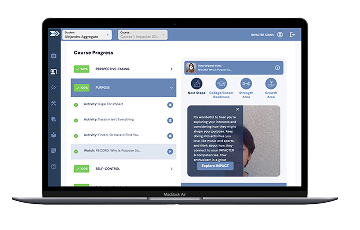
IMPACTER competency dashboard:
– 23% of students increased Curiosity scores by 15+ points this quarter
– Top growth trajectory: Jamal (445 → 612) after discovering investigative podcasting
– Class median Curiosity competency: 534 (up from 487 in September)
– Strongest growth area: Cross-Domain Investigation (+18% class-wide)
Students don’t just see abstract numbers. They track specific competency development:
Jamal’s reflection: “My Curiosity score went from 445 to 612 this semester. I can literally see how I got better at asking questions that lead to other questions. Like when I started researching podcast equipment, I ended up learning about audio engineering, which led to acoustic architecture, which somehow got me reading about how concert halls affect music perception. My brain makes connections differently now.”
The Viral Moment for Human Skills Analytics
This is Spotify Wrapped for character competencies. Students screenshot their growth curves. They flex their Perspective-Taking scores jumping 34 points. They track which Anchor Attributes are trending upward.
Sample student social media post: “Curiosity competency just hit 673 💪 From barely asking follow-up questions to conducting three-hour research spirals. The character development is REAL.”
The 8 Anchor Attributes become measurable, shareable, growable. Character education meets data culture.
The Competition Isn’t Even Close
Competitor platforms: “Take our 47-question survey about your learning preferences!”
IMPACTER students: Recording 16-minute voice reflections about their latest investigative obsession, watching their Curiosity scores climb in real-time, sharing competency growth stories with friends.
The Neural Assessment Engine processes 1+ billion words of authentic student language, achieving 97% scoring accuracy vs expert human evaluators. Students can’t fake depth. They can’t game investigative passion. They can only demonstrate it — and IMPACTER measures what they actually demonstrate.
The future: Students graduate with portfolios of character competency growth data, not just GPAs. Employers see Curiosity trajectory charts, not just transcripts. Universities review authentic voice evidence, not just essays.
We’re not measuring what students think about their curiosity. We’re measuring how curiously they actually think.
Ready to see how student voice becomes the data? Let’s talk. → impacterpathway.com
Explore the 8 Anchor Attributes → impacterpathway.com/blog
Share The Post — because curiosity this unfakeable deserves the algorithm boost.